
To wrap up this Black History Month series, I want to introduce you to a handful of people who are known for their contributions to one (or more) of the STEM fields. STEM stands for Science, Technology, Engineering, and Math. I admire the ingenuity and grit these people demonstrated as they designed new inventions and improved the lives of people around them. For more biographical information about these and others, visit the Black Inventor (mostly US) or the Black in STEM articles at The Canadian Encyclopedia (Canadian) sites.
To see the other posts in this series, go to:
Part 1 - Civil Rights & Historical
Part 2 - Africa
Part 3 - Arts & Sports
Part 4 - STEM
Bonus! Picture Books
Bonus! Bitmoji Library
🍁=Canadian
Photo by heylagostechie on Unsplash
Bessie Coleman
The first female aviator of African descent. Bessie Coleman started life surrounded by Texan cotton fields, but her dreams took her across the ocean and into the skies.

Charles Henry Turner
Always full of questions (and patience to find out the answers), Charles Henry Turner studied biology and became a leading entomologist in the US over 100 years ago.

🍁Elijah McCoy
Elijah loved fixing things and studied engineering in Scotland. When he returned to America in 1866, he could only get a job shovelling coal and greasing train engines. Using his engineering skills, he designed and installed an oil cap that made the train run smoother and without stops. Part of the Great Idea Series by Monica Kulling.

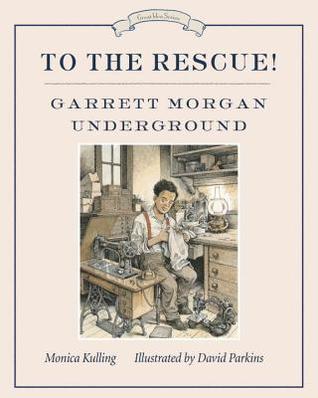
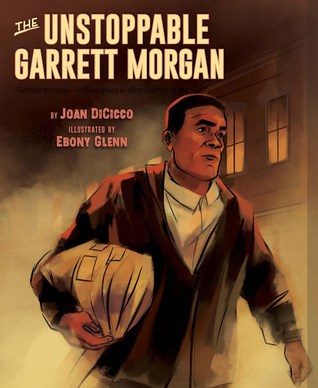
Garrett Morgan
Full of ideas, Garrett Morgan kept inventing things to improve peoples lives. His greatest invention was a safety hood to protect firefighters rescuing people from burning buildings (which was later modified as gas masks during World War I).
Katherine Johnson
Since the movie Hidden Figures came out a few years ago, there have been several picture books about Katherine Johnson and the other African-American ladies who worked at NASA during the Apollo missions. These two are my favourites of the many that have been written.


Here's a picture book that introduces us to four women mathematicians who worked at NASA during the Apollo missions: Dorothy Vaughan, Mary Jackson, Katherine Johnson, and Christine Darden.

Lonnie Johnson
This book follows Lonnie Johnson's inventive adventures from childhood, through his time at NASA, to his biggest success—the Super Soaker! Regardless of the challenges faced, he didn't give up. "Because facing challenges, solving problems, and building things are what Lonnie Johnson loves to do."

Philip Freelon
This is the story of Philip Freelon who, with his team, has focused on designing schools, museums, and other buildings that connect people to one another. In 2009 they won the bid to design the Smithsonian National Museum of African American History and Culture.

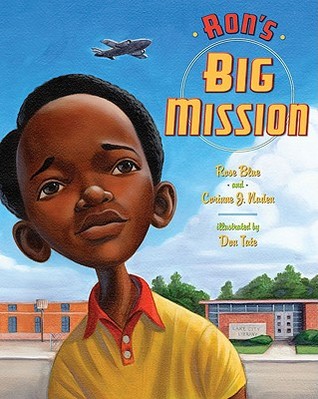
Ron McNair
A fictionalized account of the day young Ron stood up against segregation in a non-violent act of civil protest at his local library. The author's note gives us a bigger picture of Ron's life and his contribution as an astronaut (and how this library later came to be dedicated to his memory).
Sarah E. Goode
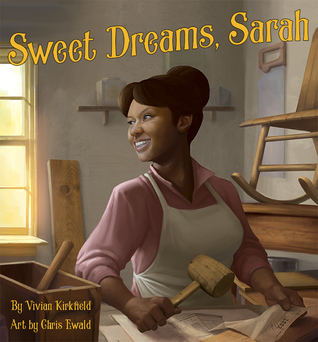
S.E. Goode was an entrepreneur, inventor, and one of the first African-American woman to get a patent in the United States.
Vivian Thomas
Starting as a research assistant and overcoming many obstacles, Vivian Thomas developed a technique that allowed doctors to successfully perform open-heart surgery on children.

Comments
Post a Comment